With two stunning coastlines, award-winning beaches and countless hidden coves to discover, Devon is one of the UK's favourite seaside destinations. Whether you're planning a family beach day, a surfing adventure or a coastal walk, staying safe around the water is an important part of enjoying everything Devon's coastline has to offer.
From understanding beach flags to knowing what to do in an emergency, here are some simple beach safety tips to help you make the most of your time on the Devon coast.
Choose a Lifeguarded Beach Where Possible
Devon is home to many beaches that are patrolled by RNLI lifeguards during the main holiday season. If you are planning to swim, choosing a lifeguarded beach is one of the safest options available.
Popular lifeguarded beaches can be found across North and South Devon, including locations such as Woolacombe, Croyde, Saunton Sands, Bantham and many of the beaches along the English Riviera.
When lifeguards are on duty, swim between the red and yellow flags, which mark the safest area of the beach for swimming and bodyboarding. These areas are monitored by lifeguards and are positioned according to the day's conditions.
Understand Beach Flags Before Entering the Water
Beach flags provide important information about conditions and potential hazards.
Before heading into the sea, take a moment to familiarise yourself with the flags on display:
Red and yellow flags indicate the safest area for swimming and bodyboarding.

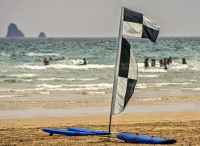
Black and white chequered flags mark areas designated for surfboards, paddleboards and other watercraft.
A red flag means conditions are dangerous and you should not enter the water.

An orange windsock indicates strong offshore winds and that inflatables should not be used.

Always check signage when you arrive, as conditions can change throughout the day.
Be Aware of Rip Currents
Rip currents are one of the most common hazards around the coast and can occur on beaches throughout Devon. These strong channels of water move away from the shore and can quickly carry swimmers out to sea.
If you find yourself caught in a rip current:
- Stay calm.
- Do not try to swim directly against the current.
- If possible, swim parallel to the shoreline until you are free of the current.
- Raise your arm and call for help if needed.
If you are unsure about conditions, speak to a lifeguard before entering the water.
Respect the Sea, Even on Warm Days
One of the biggest misconceptions about the sea around Devon is that warm weather means safe swimming conditions. While the air temperature may be high, the water can remain surprisingly cold.
Sudden entry into cold water can cause cold water shock, leading to involuntary gasping and difficulty breathing. Water safety experts advise entering the water gradually and taking time to acclimatise.
This is especially important for children, less confident swimmers and anyone participating in water sports.
Leave Inflatables on the Beach
Inflatable lilos, rings and toys can seem harmless, but they can quickly be carried offshore by wind and currents.
Every year, lifeguards respond to incidents involving inflatables drifting out to sea. If you are visiting a Devon beach with children, it is best to use inflatables away from the water and always follow any warnings displayed on the beach.
Keep an Eye on the Tides
Devon's coastline is shaped by powerful tides that can dramatically change the appearance of beaches throughout the day.
Before setting out, check local tide times and be aware that some coves, beaches and coastal paths can become inaccessible at high tide. This is particularly important when exploring hidden beaches or walking beneath cliffs.
If you are unsure, seek local advice before setting off.
Learn the Float to Live Technique
If you unexpectedly find yourself in difficulty in the water, the advice from water safety organisations is simple: Float to Live.
The technique involves:
- Tilting your head back.
- Relaxing and floating on your back.
- Extending your arms and legs.
- Controlling your breathing.
- Calling for help when able.
Fighting against the water can quickly lead to exhaustion, whereas floating can help conserve energy until assistance arrives.
Know What to Do in an Emergency
If you see someone in difficulty in the sea, avoid entering the water yourself.
Instead:
- Call 999 and ask for the Coastguard.
- Alert a lifeguard if one is present.
- Throw something that floats to the casualty if possible.
Acting quickly while keeping yourself safe can make a vital difference.
Enjoy Devon's Coastline Safely
From the surfing beaches of North Devon to the sheltered bays of the South coast, Devon offers some of the most spectacular seaside experiences in the UK. By following a few simple safety precautions, you can enjoy everything the county's coastline has to offer with confidence.
Whether you're swimming, surfing, paddleboarding or simply enjoying a day on the sand, understanding beach safety in Devon will help ensure your visit is memorable for all the right reasons.